
OUR VISION

Why Slow Fashion?
The vision of a sustainable Slow Fashion clothing brand was born in Japan in 2007 and launched in Brussels in 2009. I was tired of mass production and unreasonable sizing systems. I wanted to create clothes based on women's own bodies, designed to fit all women's bodies, preferably practical garments with pockets and elastic waistbands that can handle our changing female bellies. And of course in a way that spares our beautiful planet.

"Clean" Fashion
Every second, a truckload of textile waste is dumped/burned on our planet and if we stopped producing clothes today, there would still be enough textiles on the planet to clothe the next six generations. Instead of continuing to throw away and buy new, we want to use textile waste as a circular resource.

Made in Sweden
We manufacture our garments in-house on a small farm outside Uppsala. We are also proud of our collaboration with local tailors and seamstresses; by supporting newly arrived small businesses, we help the local economy grow, improve integration and reduce our carbon footprint by keeping production closer to home.
Garments made from textile waste
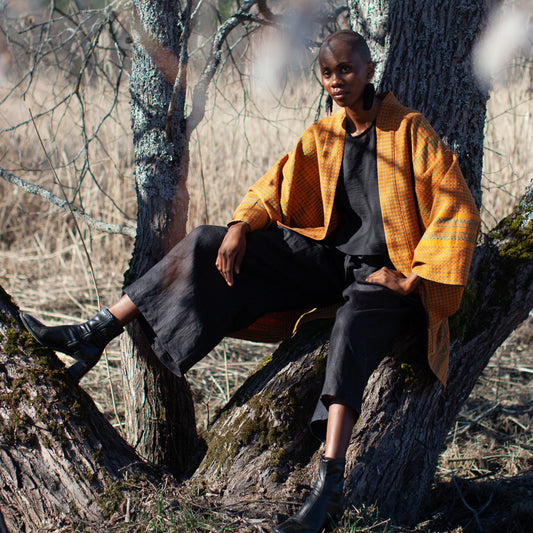
Discarded curtains, tablecloths and bedspreads become "new" fashion items.
-
Yuki kimono in tablecloth
Regular price 1 750 SEKRegular priceUnit price per -
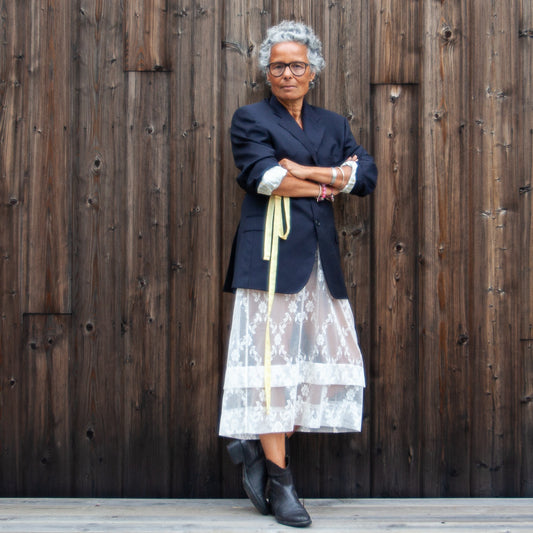
Transparent lace curtain dress
Regular price 1 150 SEKRegular priceUnit price per -
Top in vintage fabric
Regular price 750 SEKRegular priceUnit price per -
White skirt in soft cotton
Regular price 1 150 SEKRegular priceUnit price per1 150 SEKSale price 1 150 SEK



"How RAORI cured my climate anxiety"
"I had felt for years that something was wrong with the fashion industry, but I still wanted to create clothes. I decided to leave the industry to move to Japan where an idea began... I decided to go my own way and pretty soon I also discovered that my climate anxiety began to heal.
I don't want clothes to be just another consumable item that ends up in landfill sooner or later. Instead, I want to make clothes from the enormous textile waste that already exists or create clothes that actually fit, where customers can choose the length, fit and measurements themselves. A garment that they can easily take care of year after year, made from sustainably produced materials, manufactured in a way that they can feel safe with.
The goal is to create a garment that the customer will love! Timeless, comfortable, locally produced and easy to repair if something breaks.
Together we can create a change in our consumption behavior."
Sustainable greetings from Hanna Westergren Gendebien