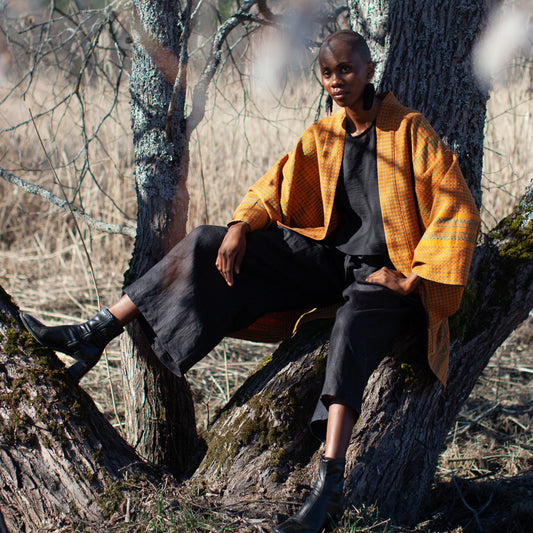
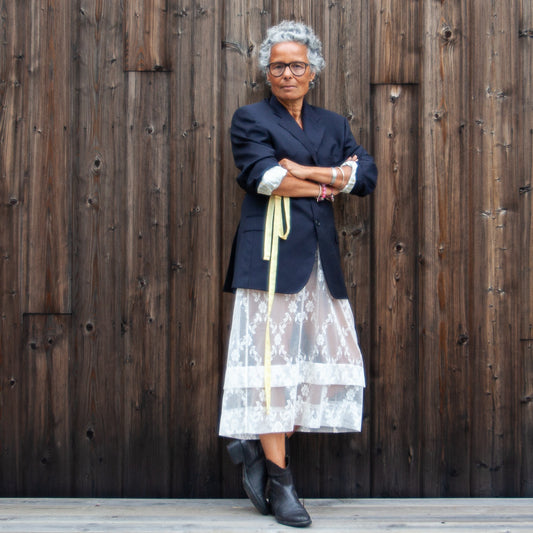
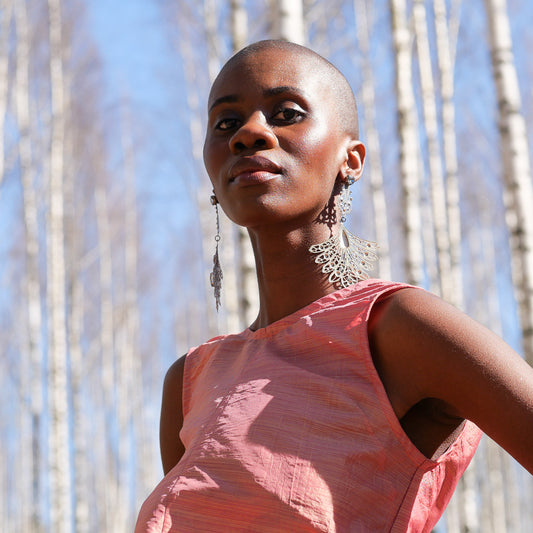
about RAORI

RAORI is a slow fashion clothing brand founded in Brussels in 2009 by Hanna Westergren Gendebien: fashion designer, textile teacher, pattern designer and industrial seamstress.
Slow fashion is the opposite of the hectic pace of the fashion world: We create warm minimalism for women - comfortable and practical garments, made locally and to your personal measurements.

Textile waste
Textile waste is a huge problem for the fashion world - every second a new truckload of textiles is dumped on our planet. We use this material as a circular resource instead of buying new, creating "new" unique garments of fantastic quality.
Get to know our designer, Hanna Westergren Gendebien
After a few years as a fashion designer in Stockholm's fashion world, I decided to quit my job and move to Japan. I didn't like how the fashion industry mass-produced garments at a breakneck speed, just so that companies in the Western world could make as much money as possible at the expense of the climate and the terrible conditions of workers in the poorer production countries. I was ready to give up fashion seriously, but Japanese kimonos gave me new ideas...


The journey continued to Brussels.
In 2008, I had just moved to Brussels and was on parental leave, so I had plenty of time to design and test my new ideas. I wanted to design clothes in a sustainable way, without producing waste. One day I managed to save a large amount of textiles from ending up in the landfill and then I knew exactly what to do!
That same year, Etsy in the US started to take off and I felt it was the perfect place for me. I sold on Etsy for 12 years until Etsy dropped the craft requirement and it was okay to start selling items that someone else had made. I could no longer compete with cheap goods and started my own platform instead.

The Photoshoot...
One of the most fun parts of running a fashion brand is photo shoots! This is where I can present the feeling behind the garments and see the design sketch come to life...
RAORI officially started when my friend wanted to do a photo shoot in an abandoned amusement park and needed my clothes on a model. Another friend posed as a model and inside the overgrown amusement park we shot my first collection in 2009. RAORI really took off thanks to good friends and family. It's impossible to do everything yourself.
Sustainable - in all areas of life
With the Brussels house full of children, the decision was made to stop buying mass-produced goods altogether! We were so tired of constant new trends, poorly made high street clothes and plastic toys that break quickly without the possibility of repairing them, terrible working conditions in poor countries, with an increasingly deteriorating climate as a result. We didn't want to be in this vicious circle anymore, so we turned off the TV with a constant stream of commercials, got out into nature, learned to bake and cook from scratch and how to make toys and everyday things from materials we had at home.


Nature house in Sweden
We left Belgium in 2016 for my home country Sweden. The dream of building a log house with a self-sufficient garden became a reality. These years have been the most important in our lives: we have learned to care for and repair our possessions instead of buying new ones. We have not only learned a lot of new knowledge and skills, but also found a strong connection to nature and the people around us. This lifestyle saves us a lot of money and has therefore given us more time to spend doing what we love and being with our children.

Part of the Slow Fashion community
In 2023 I released my first Swedish collection, in 2024 I was nominated for Sweden's Re-Designer and am now an obvious part of the Swedish Slow Fashion movement. I am a sustainable fashion activist and inspire others by organizing circular fashion shows, Remake workshops and lecturing about the dark side of the fashion industry and what we ourselves can do for a sustainable fashion future.
Sustainable lifestyle
View all-
5 steps to a sustainable wardrobe and finding y...
1. Take inventory of your wardrobe Start by reviewing what you already have: Lay everything out on the bed, clear out the clothes you don't use: mend, sell, give away,...
5 steps to a sustainable wardrobe and finding y...
1. Take inventory of your wardrobe Start by reviewing what you already have: Lay everything out on the bed, clear out the clothes you don't use: mend, sell, give away,...
-
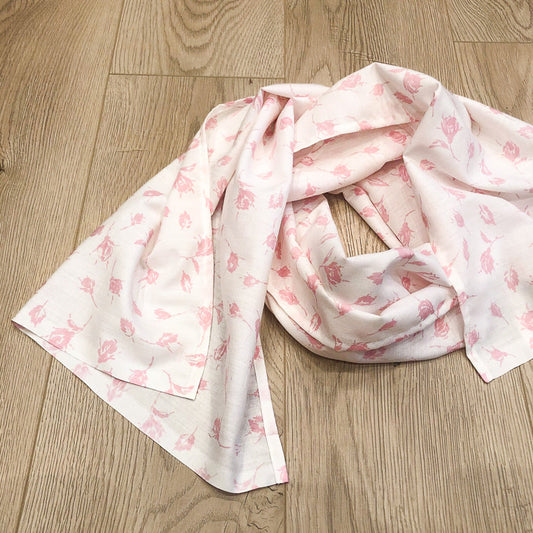
A simple summer scarf, beginner sewing
Do you have a sewing machine and don't know what to do with it? Spring is coming and here is a super simple description of how you can sew a...
A simple summer scarf, beginner sewing
Do you have a sewing machine and don't know what to do with it? Spring is coming and here is a super simple description of how you can sew a...
-
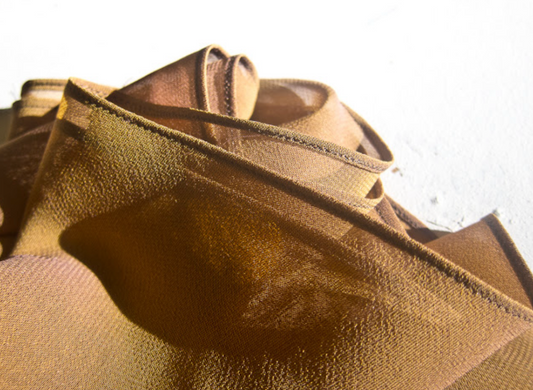
Haute Couture mini-skirt
This is our best description of how to make a beautiful “mini hem” on a thin chiffon skirt, wedding dress or any other garment made from thin, woven fabric. This...
Haute Couture mini-skirt
This is our best description of how to make a beautiful “mini hem” on a thin chiffon skirt, wedding dress or any other garment made from thin, woven fabric. This...
Circular fashion garments
These unique garments are made in a climate-smart way from old memories: grandma's embroidered tablecloths and curtains come back to life and are transformed into a unique garment that you will be the only one to wear. Every second, a truckload of textile waste is dumped on our planet. Instead of throwing it away and buying new, we want to make the most of this circular resource.
-
Yuki kimono in tablecloth
Regular price 1 750 SEKRegular priceUnit price per -
Transparent lace curtain dress
Regular price 1 150 SEKRegular priceUnit price per -
Top in vintage fabric
Regular price 750 SEKRegular priceUnit price per -
White skirt in soft cotton
Regular price 1 150 SEKRegular priceUnit price per1 150 SEKSale price 1 150 SEK